How to Choose the Right Fence for Your Home
Every homeowner has a different reason for wanting a fence. Maybe you just adopted a dog who treats your backyard like an open highway. Maybe your kids are getting older and you want a safe space for them to play. Or maybe you’re just tired of making eye contact with your neighbor every time you step outside.
Whatever the reason, the fence you choose needs to match the way you actually live — not just the way your yard looks on paper.
Here’s how to narrow it down without overcomplicating it.
Know What You Need It to Do
This sounds obvious, but it’s the step most people skip. They start shopping materials before they’ve answered a simple question: what’s this fence actually for?
- Privacy — You’ll want something solid and tall, like a 6-foot wood or vinyl privacy fence.
- Kids and pets — Focus on height, gap spacing between pickets, and secure gate latches. A decorative aluminum fence with wide picket spacing won’t keep a small dog in.
- Security — Think heavy-duty chain link with privacy slats, steel, or a system paired with an automated gate operator.
- Curb appeal — Ornamental iron or powder-coated aluminum fencing can completely transform a front yard without blocking sightlines.
Most homeowners need a combination of these. That’s fine — just know which ones matter most before you start comparing quotes.
Take a Hard Look at Your Property
The fence that looked perfect on someone else’s Instagram might not work on your lot. A few things to check before you get too attached to a style:
Slopes and terrain. A flat yard is easy. But if your property has grade changes, certain styles — like rigid horizontal panels — don’t install cleanly without custom work. Wood, vinyl, and aluminum can all be racked or stepped to follow slopes, but it takes an experienced installer to get it right.
Property lines. Installing a fence even a few inches over your boundary can create real problems. For your protection, we strongly recommend scheduling a licensed property surveyor to complete a stake survey prior to installation. This ensures the fence is placed correctly and prevents any future property line disputes.
HOA rules. Many Louisville and Southern Indiana neighborhoods have restrictions on fence height, material, and even which direction the “finished” side faces. Always check before you commit.
Utilities. We handle the 811 request for all public utility locates. Private utilities — such as irrigation lines, landscape lighting, invisible dog fences, and other homeowner-installed lines — are not marked by 811. We’re happy to use common sense and do our best to avoid anything you point out, but we can’t see underground, so we can’t be responsible for unmarked private utilities.
Pick the Right Material for Your Lifestyle
There’s no single “best” fence material. There’s only what’s best for you. Here’s the honest breakdown:
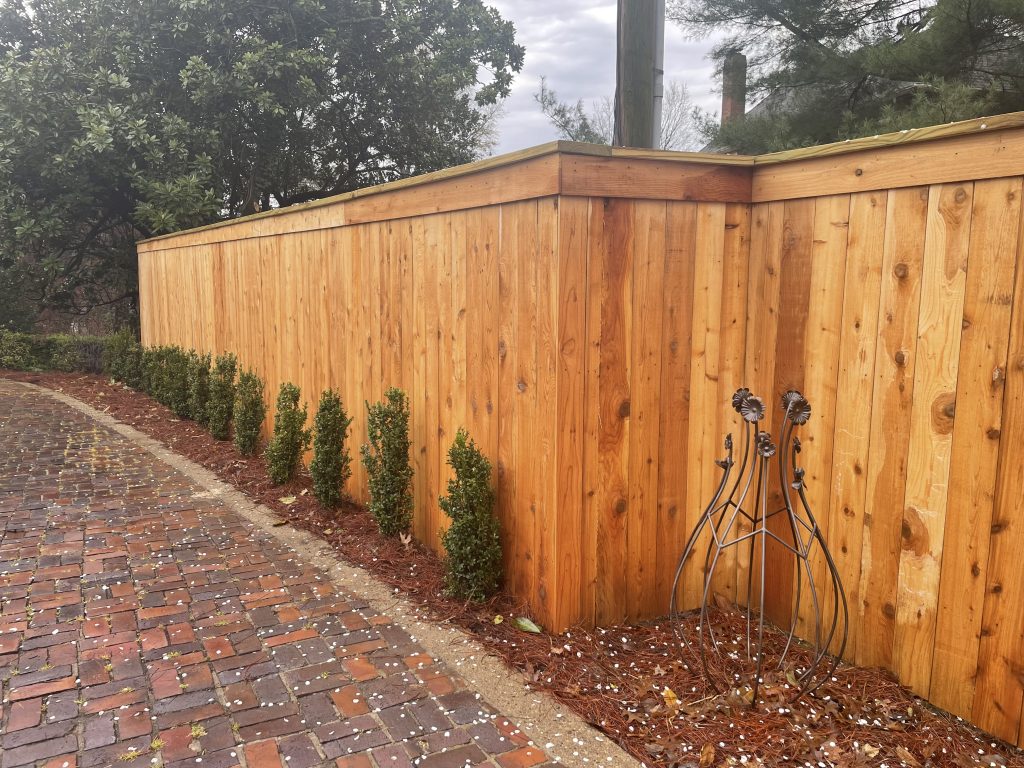
Wood is warm, classic, and endlessly customizable. It’s ideal for privacy fences and works beautifully in Louisville’s older neighborhoods. The trade-off? It needs staining or sealing every couple of years, and cheap lumber won’t survive Kentucky’s humidity and freeze-thaw cycles. If you go wood, invest in quality.
Vinyl gives you the clean look of a painted fence without the upkeep. It won’t rot, warp, or splinter. It costs more upfront than wood, but you’ll likely spend less over the life of the fence since routine maintenance is basically done with a garden hose.
Aluminum is the go-to for pool enclosures, front yards, and anywhere curb appeal matters. Powder-coated aluminum won’t rust or fade, and it comes in a wide range of styles. It’s not a privacy fence — most designs are open picket — but for decorative fencing, it’s hard to beat.
Chain link is the most affordable option per linear foot and still one of the most practical. It’s durable, low-maintenance, and works well for large backyards and dog runs. If aesthetics are a concern, black vinyl-coated chain link is a significant upgrade over standard galvanized.
Ornamental iron and steel make a statement. They’re strong, timeless, and can be custom-fabricated to almost any design. They’re a premium choice — best suited for front yards, entryways, and homeowners who want something that turns heads.
Don’t Overlook the Gate
Your gate opens and closes hundreds of times a year. It takes more wear than any other part of your fence, and it deserves more than an afterthought.
Make sure it’s wide enough for how you’ll actually use it — lawn equipment, strollers, wheelbarrows. And if convenience or security matters to you, ask about gate operators. Being able to open your gate from your car or phone is one of those upgrades people wish they’d done sooner.
Think Lifetime Cost, Not Just Install Cost
A cheaper fence that needs repairs and repainting every few years can easily cost more over time than a pricier option that lasts for decades with minimal upkeep. When comparing bids, ask your contractor about realistic maintenance expectations — not just the install price.
Work With Someone Who Knows Your Area
Soil conditions, local permit requirements, HOA quirks, weather patterns — all of it affects how your fence performs long-term. A contractor who knows Louisville and Southern Indiana will steer you toward what actually works here, not just what’s trending online.
At Raatz Fence Company, we’ve been installing residential fencing across the Kentuckiana area since 1971. We’ll walk your property, talk through your options honestly, and help you land on the right fence — the first time.